La Palma · Canary Islands · 1,360 m asl · 28°N
The Sistine Chapel of Astronomy
Where every photon
arrives clearer.
Seeing around 1 arcsecond under the world's most protected sky. Home your telescope under Bortle 1 skies with full remote control — on Europe's finest astronomical island.
85.2 % annual clear rate.
Peak 22.03 — measured 2025.
Low humidity · stable atmosphere.
Our services
Three tracks — one world-class site
Whether you're an astrophotographer, a research institution, or a satellite operator, we offer the infrastructure, the sky, and the expertise you need.
Astrophotography Hosting
Remote pier hosting for amateur and advanced telescopes. Plans by aperture from 6″ to 24″+. Full remote control — roof, power, VPN, client portal. Imaging every clear night.
Explore plans →Scientific & University Hosting
Long-term contracts for research institutions. MPC observatory code eligible. Photometric calibration support, data archive, NDA-ready, CCSDS-compliant data products. B2B invoicing.
Learn more →Satellite & Debris Tracking
Optical SSA from the Atlantic edge of Europe. LEO / MEO / GEO custody, conjunction assessment, reentry prediction, photometric characterization. NDA-ready · ISO in progress.
See capabilities →Live
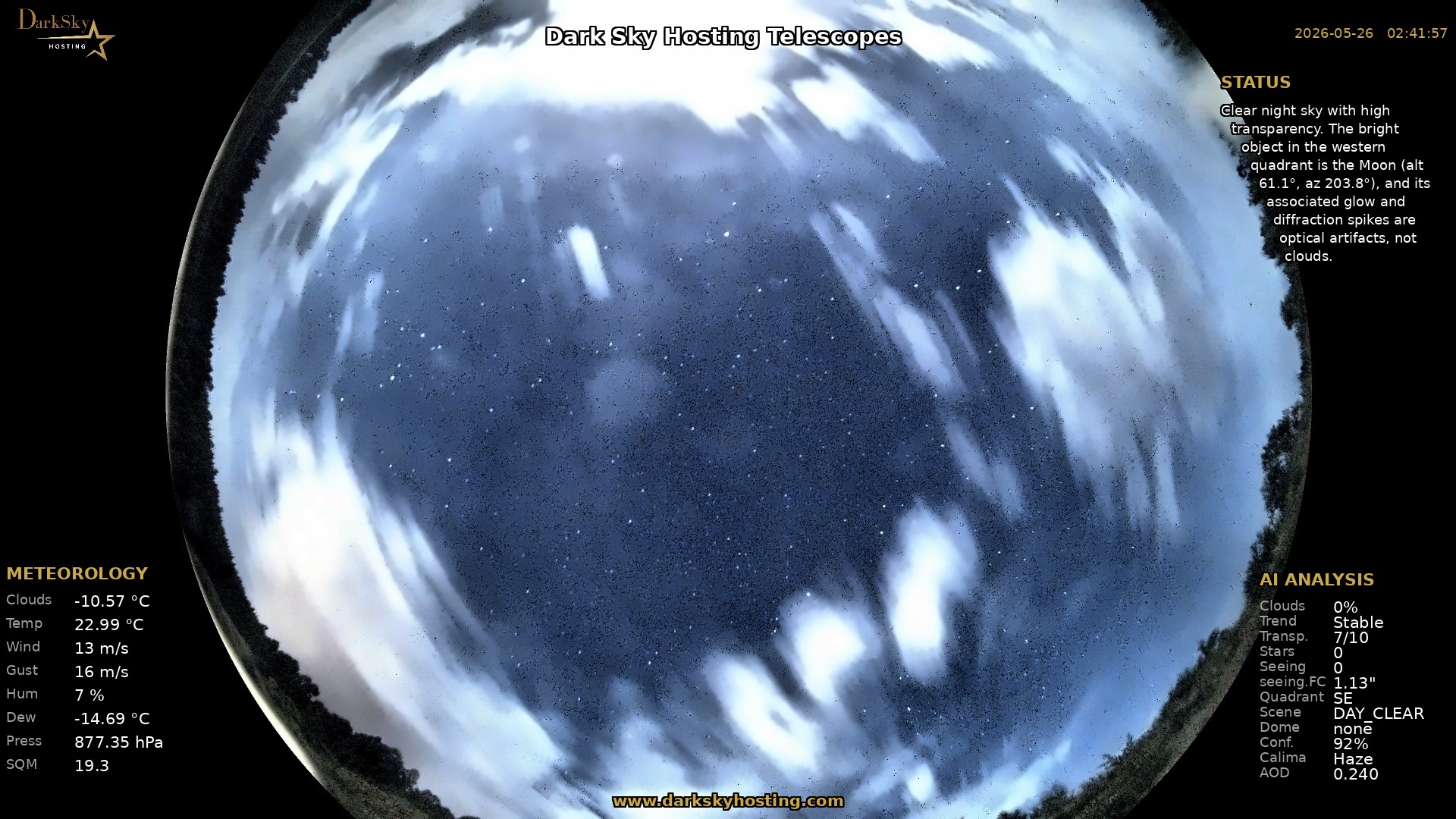
Sky conditions right now
Real data from our on-site sensors. The all-sky camera refreshes every 60 seconds.

Gallery
The sky we offer
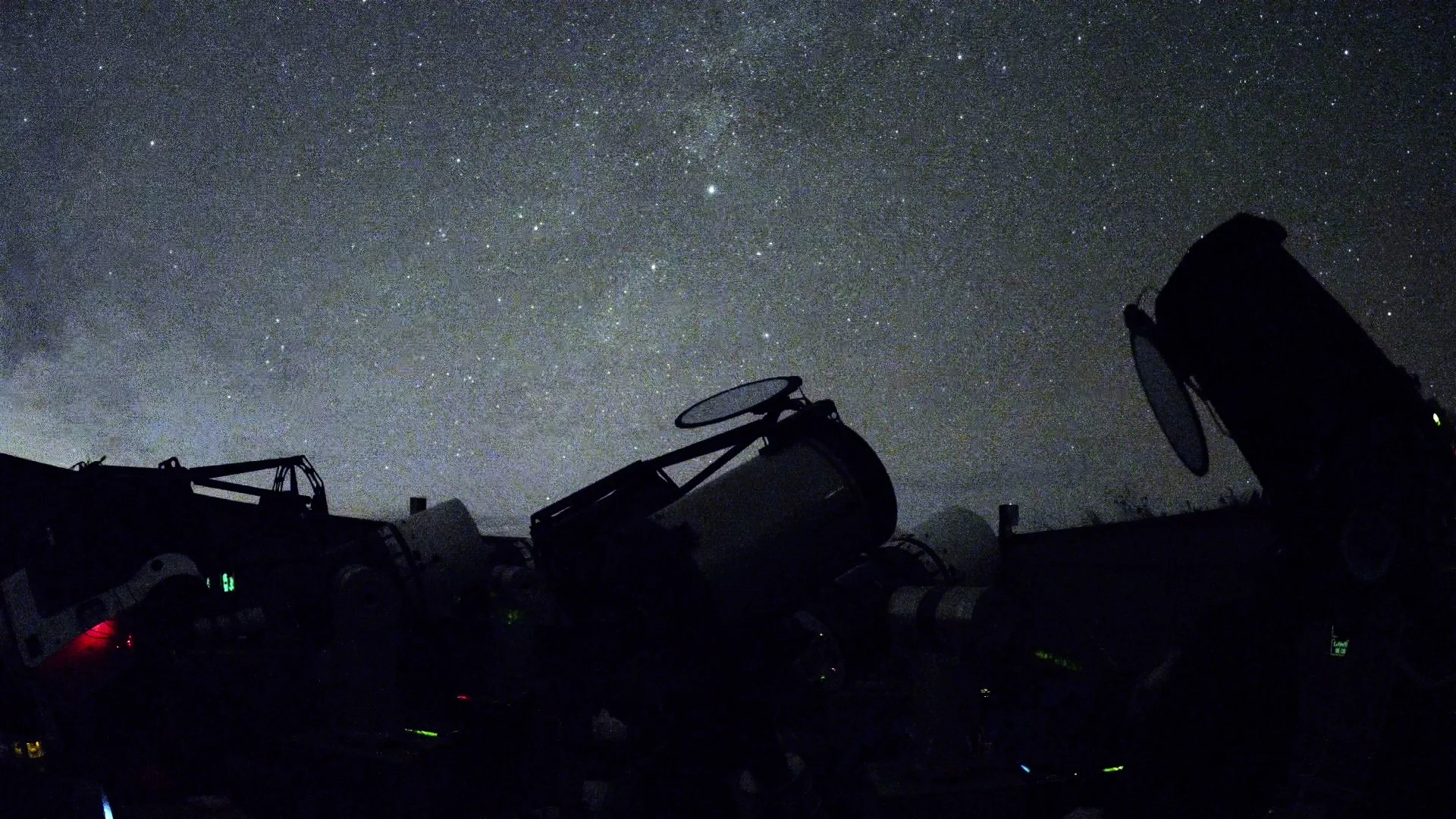
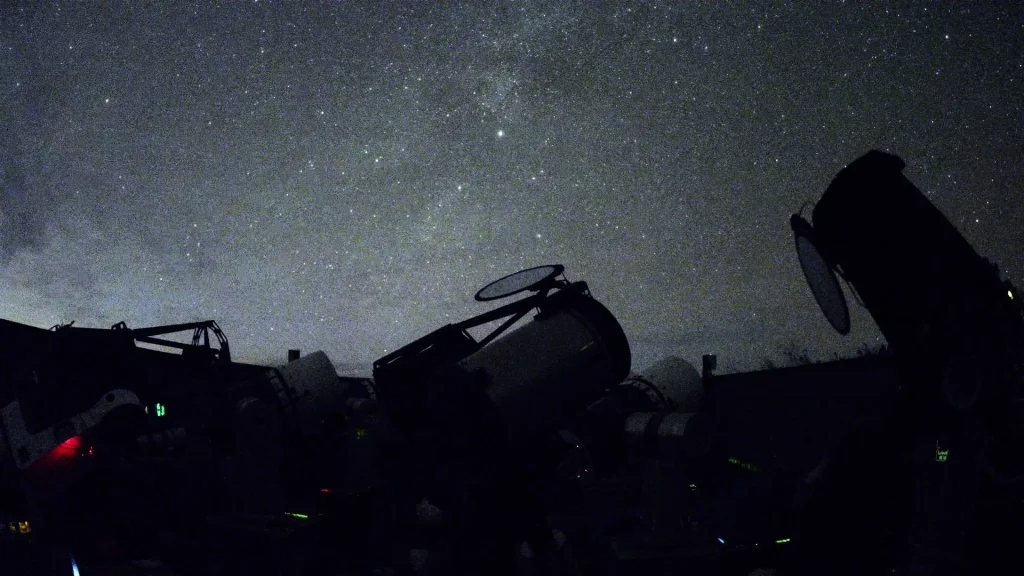
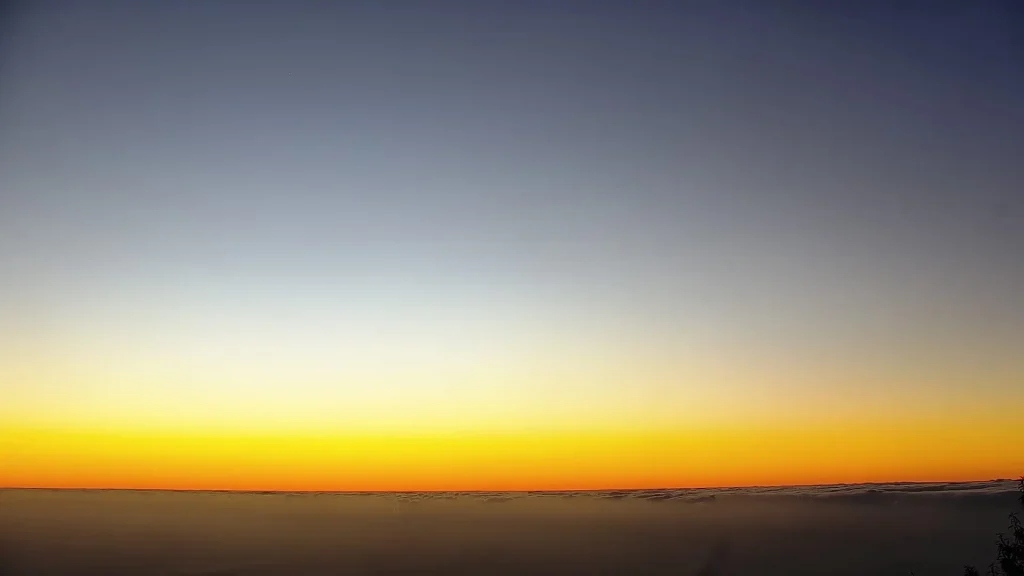
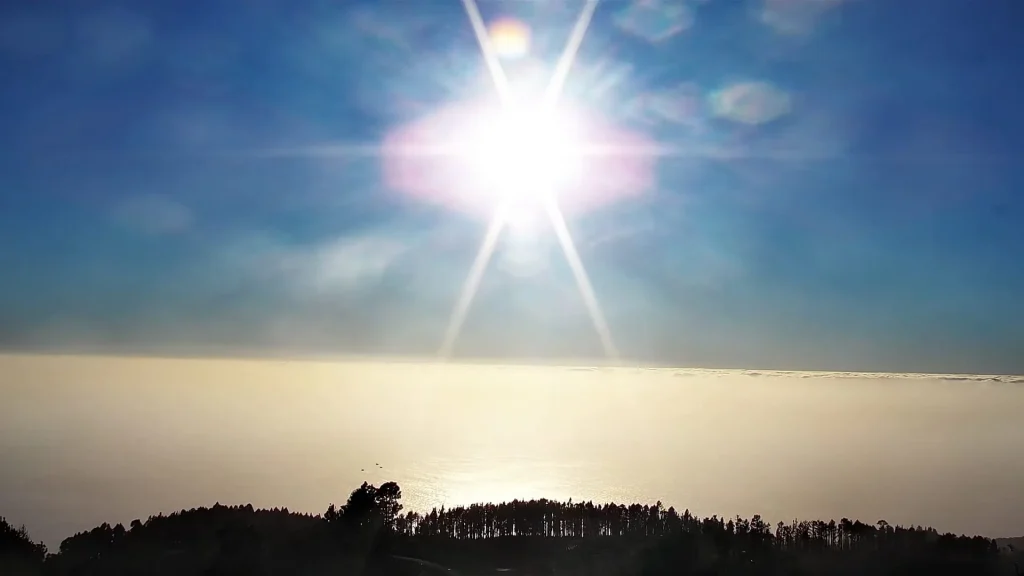
Images captured at our site. Not stock. Not simulations. This is what your telescope will see.
Why La Palma
The competitive advantage that can't be replicated
La Palma's advantages aren't marketing. They're written into law, measured by the IAC, and backed by 35 years of professional astronomy.
Sky protected by law since 1988
The Canary Islands Sky Law (Law 31/1988) restricts light pollution, radio interference, and air traffic over the observatories. No other private hosting site in the world can claim this.
EU territory · no customs hassle
Shipping equipment within the EU — no import duties, no delays at customs, no restricted-technology issues. Same legal framework as Germany or France.
Direct flights from 12 European cities
Easy access to visit your installation: London, Frankfurt, Amsterdam, Madrid, Lisbon and more. The island is small — airport to observatory in under 45 minutes.
Above the inversion layer · stable atmosphere
At 1,360 m our site sits above the marine inversion layer that traps humidity below. Result: 28 % avg. humidity at night, exceptional atmospheric stability.
Darkest legal sky in Europe
Bortle 1 · SQM up to 22.03. The Roque de los Muchachos hosts the GTC, the world's largest optical telescope. Your amateur equipment benefits from the same sky.
24/7 on-site staff & security
Human presence at the facility round the clock. CCTV, secure access, direct line to local authorities. Your equipment is never unattended.
Zero light pollution.
Only the sky itself.
This is what the night sky looks like in emission spectroscopy from our site. Every line in this spectrum is natural — produced by the upper atmosphere, not by human activity.
![Airglow emission spectrum La Palma · [OI] 5577 · Na I 5890 · David Cejudo](wp-content/uploads/2026/04/spectrum-airglow-n1.png)
Spectrum: David Cejudo · 14″ telescope + spectrograph · La Palma facility ·
airglow_cd30 · 2026-04-15 · 4200 s (7 × 600 s)
David Cejudo is a spectroscopist with his instrument permanently hosted at our facility, observing every clear night.
His work includes cataclysmic variable monitoring, recurrent nova spectroscopy and night-sky emission studies.
Get started
Ready to put your telescope to work every clear night?
Tell us about your equipment and observing goals. We'll find the right pier, the right plan, and get you imaging within weeks — not months.